Living in Mauritius: what expats share
· L'équipe Ykone · 7 min read
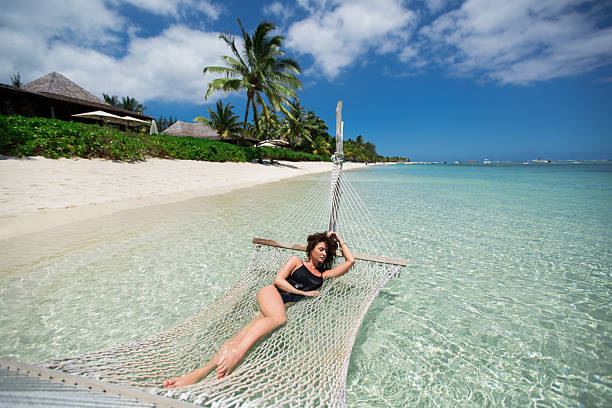
Mild climate year-round, a warm community, international schools: here's what the expat community in Mauritius shares about daily life — without forgetting the challenges to anticipate.
Mauritius welcomes a constantly growing international community. French, British, South Africans, Belgians, Swiss, Italians: thousands have chosen the island to live for a few years or settle permanently. Beyond the postcard landscapes, what truly keeps them on the island?
Through daily exchanges with the buyers and residents we accompany, certain observations come up again and again. Climate, social life, schooling, taxation, but also a few challenges to anticipate: here is what the expat community in Mauritius willingly shares about the reality of living on the island.
Climate and pace of life
First topic that comes up systematically: the climate. Mauritius enjoys a temperate tropical climate, with two mild seasons — a warm and humid summer from November to April, a drier and cooler winter from May to October. For many expats coming from Europe, it marks the end of grey winters and the beginning of daily natural light.
Beyond the climate, it is the pace of life that changes. The proximity of the sea, the mountains, and natural spaces accessible within minutes transforms the daily routine. Expats often mention a more outdoor lifestyle, easier disconnection from the European urban rhythm, and a better balance between professional and personal life.
Mauritius doesn't just change your address — it changes your relationship with time.
The expat community and social life
Mauritius has the particularity of hosting diverse and well-organised expatriate communities. The French community is particularly present, notably in the West (Tamarin, Black River, Rivière Noire) and the North (Grand Baie, Péreybère). One also finds Anglo-Saxon, South African, and more broadly European communities.
This diversity creates an active social fabric: sports associations, cultural events, sailing clubs, surf schools, WhatsApp support groups, organic markets… For newcomers, integration often happens quickly through schools, water sports, or professional circles.
The French/English bilingualism considerably eases arrival: no need to master a rare local language. Most Mauritians speak at least one of the two languages, and many speak both.
International schools
Schooling is a central topic for families. Mauritius offers several recognised options:
- The French network (Lycée Labourdonnais, Écoles du Centre, etc.) follows the official French curriculum from kindergarten to final year.
- British and international schools (Le Bocage International School, Northfields International, etc.) offer the Cambridge International curriculum or the International Baccalaureate (IB).
- High-quality private Mauritian schools complete the offering.
The choice of geographic settlement is often guided by school proximity. Many families prefer the West (close to the Lycée Français de Maurice, international schools) or the Centre. The quality of education is broadly recognised and allows a smooth continuity for children in case of return or international mobility.
Taxation and administrative framework
This is one of Mauritius's most-cited advantages: a clear and competitive tax framework, for both individuals and investors. The island has a readable tax system, and numerous double taxation treaties signed with the main countries of origin of expats (France, United Kingdom, Belgium, Switzerland, South Africa, etc.).
On a daily basis, administrative procedures — residence permit, opening of bank accounts, vehicle registration — are structured and accessible, provided one is properly supported from arrival. Local guidance significantly streamlines the first weeks.
For precise and up-to-date conditions (personal taxation, EDB programmes, residence permit), we recommend consulting your Mauritian notary, EDB Mauritius, or our team.
Challenges to anticipate
Honesty is a prerequisite for a successful settlement. Here are the challenges expats arriving in Mauritius often share:
- The local administrative pace can be slower than in Europe on certain procedures. Patience and local guidance are valuable.
- The logistics of daily life require an adjustment period: certain specific European products are scarcer or more expensive, specialised medical care sometimes requires travelling to the capital.
- The cyclone season (December to April) implies seasonal vigilance. Infrastructure is well prepared and cyclones of major intensity remain rare, but it is a meteorological reality to integrate.
- The geographical distance from Europe or North America is felt in flight times and the cost of tickets to visit relatives.
None of these challenges are deal-breakers — they are simply part of the reality of settling in Mauritius, which is better anticipated than discovered.
Why the West concentrates a large part of the expat community
The Mauritian West — around Tamarin, Black River, and Rivière Noire — has gradually become a true hub for the expat community. Several reasons explain this: a microclimate drier than in the East, spectacular landscapes (Le Morne, dunes, lagoons), a concentration of international schools, a varied real estate offering, and a commercial fabric oriented towards the expectations of international residents.
It is in this region that our team is based, in Tamarin. This location allows us to understand daily the settlement challenges of our clients and to coordinate the best local interlocutors — notaries, lawyers, advisors — suited to their project.
Making Mauritius your life project
Settling in Mauritius means embracing a life project as much as a wealth decision. The expat community testifies to a transition often successful, provided one is well prepared and well supported.
Are you considering settling in Mauritius? Our team accompanies you through each step — from choosing the region to the residence permit, coordinating the local experts most suited to your project.
FAQ
What is the climate like in Mauritius?
A mild tropical climate with two seasons: a hot, humid summer from November to April, and a drier, cooler winter from May to October.
Do I need to speak a local language to live in Mauritius?
No. Most Mauritians speak at least French or English, and many speak both, which makes settling in much easier.
What international schools are there in Mauritius?
The French network, which follows the official French curriculum from nursery to the final year, British and international schools offering Cambridge International or the International Baccalaureate, and good private Mauritian schools.
Where do expats live in Mauritius?
Many settle in the West, around Tamarin, Black River and Rivière Noire, for its drier microclimate, international schools and property offer, or in the North, around Grand Baie and Péreybère.
What are the downsides of living in Mauritius?
Administration can be slower than in Europe, some products are scarcer or more expensive, specialist medical care sometimes means travelling to the capital, there is a cyclone season from December to April, and Europe is far away. None of this is a deal-breaker, but it is better to plan for it.